

Find Copa Airlines flights to Cuba from CAD 595*
expand_more
expand_more
1 Passenger
expand_morePromo Code
expand_moretoday
today
Restrictions apply; please see Terms & Conditions.
Round-trip flights to Cuba
flight_takeoff
flight_land
CAD
sortkeyboard_arrow_down
Toronto (YYZ)to
Havana (HAV)Feb 23, 2027 - Mar 10, 2027
From
CAD 595
Viewed 2 hours ago
Round trip
Economy
Montreal (YUL)to
Havana (HAV)Jan 21, 2027 - Feb 02, 2027
From
CAD 597
Viewed 9 hours ago
Round trip
Economy
*Fares displayed have been collected within the last 48hrs and may no longer be available at time of booking. Additional fees and charges for optional products and services may apply.
*Restrictions apply; please see Terms & Conditions.
Round-trip fares to Cuba
flight_takeoff
flight_land
CAD
Toronto (YYZ)to
Havana (HAV)
Feb 23, 2027 - Mar 10, 2027
Round trip
Economy
From
CAD 595
Viewed 2 hours ago
Montreal (YUL)to
Havana (HAV)
Jan 21, 2027 - Feb 02, 2027
Round trip
Economy
From
CAD 597
Viewed 9 hours ago
*Fares displayed have been collected within the last 48hrs and may no longer be available at time of booking. Additional fees and charges for optional products and services may apply.
*Restrictions apply; please see Terms & Conditions.
Destination facts
Copa Airlines hub
Hub of the Americas® in Panama
Discover Cuba
Fly to Cuba through the Hub of the Americas® in Panama City. Cuba combines colonial cities, white-sand beaches and turquoise waters, valleys of mogotes (limestone hills) and a culture full of music and flavor. Choose your departure city and dates to check available flights to Havana (HAV).
View flightsWhat should you know before traveling to Cuba?
Copa flies to Havana. The official currency is the Cuban peso (CUP), you can pay in cash or by card, and before you travel you must complete the D'Viajeros form. Check the entry requirements for your nationality.

Airport
José Martí International Airport (HAV), in Havana, the gateway for combining the capital with Varadero, Viñales or Trinidad.

Currency
The national currency in Cuba is the Cuban Peso (CUP). You can pay in cash in Cuban pesos or with bank cards, depending on your bank.

Time zone
UTC-5, one hour ahead during daylight saving time.

Entry form
D'Viajeros is mandatory for every passenger: when you complete it, you get a QR code that you show when you enter the country.
Is Cuba right for you?
Yes, if you're drawn to historic cities, music, Caribbean beaches and countryside landscapes. Depending on your type of trip, these are the plans that fit best.
History and architecture
Explore Old Havana and the historic center of Trinidad, two colonial ensembles declared UNESCO World Heritage Sites.
Music and dance
Son, salsa and bolero can be heard in squares, cultural centers and on the Malecón. It's a great trip for taking a salsa class.
Beach
White sand and turquoise waters in Varadero and the northern cays, with diving and snorkeling over coral reefs.
Nature
Hiking, horseback riding and caves in the Viñales Valley, and waterfalls and forests in Topes de Collantes, near Trinidad.
As a couple
Sunsets on Havana's Malecón, strolls along colonial streets and beach days in Varadero.
With family
Fine-sand beaches in Varadero and the cays, and walks through the squares of Old Havana. Check sea conditions before going in the water.
When is the best time to travel to Cuba?
It depends on your plans. The less rainy season runs from November to April and the rainy season from May to October. The weather is warm most of the year; check the forecast and sea conditions before you travel.
Less rainy season
November to April. Between December and March, the brief Cuban winter, it's a good idea to pack a light jacket for the evenings.
Rainy season
May to October. The weather stays warm and the landscape is greener.
For the beach
Cuba's beaches can be enjoyed all year round, and the water temperature ranges from 24 to 29 °C. Check sea conditions before going in.
Cultural events in Havana
The International Festival of New Latin American Cinema, the Havana International Ballet Festival and the International Book Fair are good reasons to choose your dates.
Peak travel dates
The year-end holidays and school vacations are very popular times: book in advance.
Havana, Varadero, Viñales or Trinidad: where should you stay?
It depends on what you're looking for: Havana for history, music and city life; Varadero or the cays for the beach; Viñales for nature; and Trinidad for colonial streets near the sea. Many travelers combine the capital with a beach area.
Havana
The capital, with Old Havana, the Malecón and a wide range of cultural activities. A good fit for the first part of the trip and for those who want history and music.
Varadero
Cuba's main sun-and-beach destination. A good fit if your trip revolves around the sea and relaxing.
Viñales
A valley of mogotes and farmland in Pinar del Río. A good fit if you're looking for hiking, horseback rides and rural scenery.
Trinidad
A very well-preserved colonial city, with beach and mountains nearby. A good fit for combining culture, sea and nature.
Northern cays
Cayo Santa María, Cayo Coco and Cayo Guillermo, with white-sand beaches and a coral reef barrier. A good fit for a few beach days.
Types of lodging
There are hotels of different categories and casas particulares (private homestays). Book before you travel, especially in high season.
What places should you visit in Cuba?
Historic centers, white-sand beaches and valleys of mogotes are where you'll find the best plans. For each place, we tell you who it's for.
Old Havana
Its historic center is a World Heritage Site, with squares such as Plaza de Armas, Plaza Vieja and Plaza de San Francisco. Best explored on foot.
Havana's Malecón
The seafront promenade, perhaps the city's most recognized symbol. Ideal at sunset.
Morro Castle
The fortress at the entrance to Havana Harbor, part of the city's old defense system. For those who enjoy history and views of the bay.
Varadero Beach
Fine sand and clear waters in many shades of blue. For a sun-and-beach trip; check sea conditions.
Viñales Valley
A UNESCO World Heritage Cultural Landscape, with mogotes, caves and trails. For hikers and nature lovers.
Trinidad and the Valle de los Ingenios
A colonial historic center and a valley that holds the memory of the sugar industry, both World Heritage Sites. For those who enjoy culture.
Ancón Beach
A beach on the south coast near Trinidad, with diving spots. For combining a colonial city and the sea.
Topes de Collantes
A large protected natural park in the mountains near Trinidad, with trails and waterfalls. For those seeking nature.
Cienfuegos
The Pearl of the South, with a neoclassical historic center declared a World Heritage Site. For a stop on the way to Trinidad.
Cayo Santa María
White-sand beaches and seabeds with diving sites, in the northern cays. For a few beach days.
How do you get to Cuba with Copa?
Choose your departure city, connect at the Hub of the Americas® in Panama City and continue to Havana.

Choose your departure city
In the search tool, you'll see the routes and flights to Havana (HAV) available for your dates.

Connect in Panama
Copa connections are made at Tocumen International Airport, in Panama City. Follow your boarding pass to get to your next flight.

Arrive in Havana
You land at José Martí International Airport (HAV), from where you can continue to Varadero, Viñales or Trinidad with your booked transfer.
What happens when you arrive at Havana's airport?
You show your D'Viajeros QR code, go through immigration with your passport and your visa or tourist card, present your travel insurance policy with medical coverage, pick up your luggage and head out to your transfer or official taxi.
-
Complete D'Viajeros before you fly
Complete the online form before your trip: when you complete it, you'll receive a QR code that you'll need to show when you enter the country.
-
Go through immigration
Present your valid passport and your visa or tourist card. Requirements depend on your nationality: check them before you travel.
-
Keep your medical policy handy
Cuban authorities require a travel insurance policy with medical expense coverage to enter the country. You can purchase it in your home country before your trip.

Pick up your luggage and clear customs
After immigration, pick up your luggage and go through customs with your travel documents at hand.
-
Head to your transfer
To get to the city, hire the official taxi service or use the transfer you booked. If you rented a car, confirm with the rental company where to pick it up.
How do you get around between Havana, Varadero, Viñales and Trinidad?
With booked transfers, your hotel's transfer, official taxis or a rental car. Plan your trips between cities before you travel and allow extra time.
Booked or hotel transfers
The most practical way to get from Havana to Varadero, Viñales or Trinidad without driving. Confirm them before you travel.
Official taxis
Useful for getting around within each city and for the ride between the airport and Havana.
Rental car
It gives you the freedom to explore the country at your own pace. There are rental locations in the main tourist areas; bring your valid driver's license.
Allow extra time for your trips
Travel time between destinations depends on the route and stops. Plan your city changes without rushing.
What currency should you bring to Cuba, and how do you pay?
Bring cash in an accepted foreign currency to exchange for Cuban pesos (CUP) and, if your bank allows it, a Visa or Mastercard. No card issued by U.S. institutions works in Cuba, so check with your bank before you travel.
Cuban peso
It's the national currency. You can pay in cash in Cuban pesos or with domestic or foreign bank cards.
Accepted cards
Visa, Mastercard, Union Pay and other networks are accepted. Ask your bank whether you'll be able to use your card in Cuba.
Cash to exchange
You can bring in foreign currencies in cash, such as the euro, the U.S. dollar, the Canadian dollar or the Mexican peso, to exchange them for Cuban pesos.
Where to exchange
At airports, banks, hotels and official exchange offices, at the current rate.
Before you return
The Cuban Peso is not valid or exchangeable outside Cuban territory: exchange whatever you have left before you leave.
What practical tips should you know before traveling to Cuba?
Set up your internet connection before you arrive, download what you'll need, pack light clothing and sun protection, and check whether you need a plug adapter.
Internet on arrival
International airports offer 30 minutes of free Wi-Fi, and 4- and 5-star hotels include internet for their guests.
Mobile line for visitors
Cuba's telecommunications company offers a temporary line for visitors with internet, calls and messages, which you can buy online and pick up at the airport. Also check with your carrier whether you have roaming in Cuba.
Download before you travel
Save offline maps, your reservations, your D'Viajeros QR code and your medical policy on your phone.
What to pack
Lightweight, light-colored clothing, a swimsuit, sandals, sunglasses, a hat and sunscreen.
Plugs
The electrical current in Cuba is 110/220 and 60 Hz, with flat-pin plugs. Bring your adapter if your devices use a different type.
Typical food
Try ajiaco, tostones, roast pork and congrí, and pair them with a Cuban coffee.
What can you do in Cuba in a week?
This is an optional idea that combines Havana, Viñales and Varadero, with rest days. If you prefer colonial culture, swap Varadero for Trinidad.
-
Day 1: Arrival
Arrive in Havana and rest.
-
Day 2: Old Havana
Walk around Plaza de Armas, Plaza Vieja and Plaza de San Francisco.
-
Day 3: Malecón and El Morro
Visit Morro Castle and end the day with the sunset on the Malecón.
-
Day 4: Viñales Valley
Day trip to Viñales to see the mogotes, hike and explore its caves.
-
Day 5: Off to Varadero
Transfer to Varadero and an afternoon at the beach.
-
Day 6: Rest
A beach day with no plans, or a diving or snorkeling outing.
-
Day 7: Return
Arrange your transfer to Havana's airport according to your flight time.
Where can you find official destination information?
These official sites publish up-to-date information on requirements, currency and things to do in Cuba.
Cuba Travel
Official tourism portal of Cuba.
D'Viajeros
Mandatory entry form for Cuba.
Electronic tourist visa
Online application for Cuba's tourist visa.
Entry requirements
Visa, passport and travel regulations on Cuba Travel.
Aduana General de la República (Cuban Customs)
What you can bring into Cuba and take back home.
Currency and payment methods
Official information on the Cuban peso and cards.
Frequently asked questions about traveling to Cuba
Quick answers to the most common questions before you travel.
What should I know if it's my first time in Cuba?
Check the entry requirements for your nationality, complete D'Viajeros, bring your medical policy, check with your bank whether your card works in Cuba, set up your internet connection and book your transfers.
What currency is best to bring to Cuba?
Cash in an accepted foreign currency, such as the euro, the U.S. dollar, the Canadian dollar or the Mexican peso, to exchange for Cuban pesos at official locations.
Can you pay by card in Cuba?
Yes, with cards such as Visa or Mastercard that were not issued by U.S. banks. Confirm with your bank before you travel.
How much cash should I bring?
It depends on your plans, your lodging and whether your card works in Cuba. Check which services you've already paid for and bring a cushion for day-to-day expenses.
Havana or Varadero?
Havana for history, music and city life; Varadero for beach and relaxation. Many travelers combine the two.
How do I get between Havana and Varadero?
With a booked transfer, your hotel's transfer, an official taxi or a rental car.
How do I travel between Havana, Viñales and Trinidad?
With booked transfers or a rental car. Viñales can be a day trip from Havana; for Trinidad, it's best to stay at least one night.
How many days do I need to see Cuba?
It depends on your plans. With a week, you can combine Havana with Viñales and a beach area, with rest days. You'll find an itinerary idea above.
How can I get internet during my trip to Cuba?
With your hotel's Wi-Fi, the temporary mobile line for visitors or your carrier's roaming, if it offers it. When you arrive, the airport has 30 minutes of free Wi-Fi.
What should I download before traveling to Cuba?
Offline maps, your reservations, your D'Viajeros QR code, your medical policy and your lodging's contact details.
Do I need a visa to travel to Cuba?
It depends on your nationality. Many travelers need a tourist visa or tourist card; check the official requirements before you travel.
What is D'Viajeros?
The mandatory entry form for Cuba. When you complete it, you get a QR code that you show when you arrive.
Do I need travel insurance to enter Cuba?
Yes: Cuban authorities require a travel insurance policy with medical expense coverage. You can purchase it in your home country before your trip.
What is the best time to travel to Cuba?
The less rainy season runs from November to April; from May to October it rains more, but the weather stays warm. Check the forecast before you travel.
Do I need a plug adapter in Cuba?
The current is 110/220 V and the plugs have flat pins. If your devices use a different type, bring your adapter.
Which cities have Copa flights to Cuba?
Use the search tool on this page to see the departure cities and available dates. Copa connects Havana with its network through the Hub of the Americas® in Panama City.
Where do I buy tickets to Cuba?
In the search tool on this page: choose your departure city and dates, review the available flights and buy your tickets to Cuba on copaair.com.
What can you manage with Copa before you fly?
Check in, manage your booking and review your baggage on copaair.com.


Are you a ConnectMiles member?
As a member, you also earn miles on hotels and other services.


Related flights
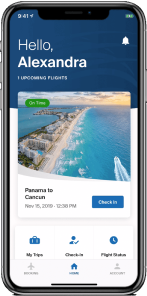
Our App
Download the Copa Airlines App now and buy tickets, manage your reservations, access to your ConnectMiles account and much more.



Subscribe and save!
Subscribe and be one of the first to know about our exclusive fares, promotions and last minute offers.
Subscribe