

Find Copa Airlines flights to Panama from USD 91*
expand_more
expand_more
1 Passenger
expand_morePromo Code
expand_moretoday
today
Restrictions apply; please see Terms & Conditions.
Round-trip flights to Panama
flight_takeoff
flight_land
USD
sortkeyboard_arrow_down
Panama (PTY)to
David (DAV)Apr 12, 2027 - Apr 15, 2027
From
USD 91
Viewed 1 day ago
Round trip
Economy
David (DAV)to
Panama (PTY)Dec 08, 2026 - Dec 09, 2026
From
USD 91
Viewed 1 day ago
Round trip
Economy
*Fares displayed have been collected within the last 48hrs and may no longer be available at time of booking. Additional fees and charges for optional products and services may apply.
*Restrictions apply; please see Terms & Conditions.
Round-trip fares to Panama
flight_takeoff
flight_land
USD
Panama (PTY)to
David (DAV)
Apr 12, 2027 - Apr 15, 2027
Round trip
Economy
From
USD 91
Viewed 1 day ago
David (DAV)to
Panama (PTY)
Dec 08, 2026 - Dec 09, 2026
Round trip
Economy
From
USD 91
Viewed 1 day ago
*Fares displayed have been collected within the last 48hrs and may no longer be available at time of booking. Additional fees and charges for optional products and services may apply.
*Restrictions apply; please see Terms & Conditions.
Destination facts
Copa Airlines hub
Hub of the Americas® in Panama
Discover Panama
Fly to Panama City with Copa Airlines: Panama's capital is the Hub of the Americas®. Discover three cities in one: the ruins of Panamá Viejo, the colonial Casco Antiguo and the modern skyscrapers, plus the Panama Canal. Choose your departure city and dates to check available flights to Tocumen International Airport (PTY).
View flightsWhat should you know before traveling to Panama City?
Panama City uses the balboa and the US dollar, is on UTC-5 and has a warm climate all year. You arrive at Tocumen International Airport, the Hub of the Americas.

Airport
Tocumen International Airport (PTY), the Hub of the Americas, in Panama City.

Currency
Balboa and US dollar. The airport terminals have banks, currency exchange offices and ATMs.

Time zone
UTC-5.

Weather and season
The city is warm and humid, with temperatures from 21 to 32 °C. The dry season, with little rain, runs from January to March.
Is Panama City right for you?
Yes, if you want history, the Panama Canal, nature within the city and good food in one trip, or want to use a layover to see it. Depending on your type of trip, these are the plans that fit best.
With family
Easy trails in the Metropolitan Natural Park, bike rides along the Amador Causeway and ships passing through the Canal locks.
As a couple or on your honeymoon
Sunsets on the terraces of Casco Antiguo and the Paseo Esteban Huertas, with views of the bay.
Adventure and nature
The trails of Soberanía National Park, one of the best places in the world for birdwatching, and the climb up Ancón Hill.
History and culture
Panamá Viejo and Casco Antiguo, both UNESCO World Heritage Sites, and the culture of the Emberá community on the banks of the Chagres River.
Food
Panama City is a UNESCO Creative City of Gastronomy. Try ceviche at the Mercado del Marisco.
On a layover or stopover
With Panamá Stopover, you can make a stop in Panama on the outbound or return leg of your trip with Copa and explore the city.
When is the best time to travel to Panama City?
Panama City is warm all year, so the best time depends on your plans. January to March is the dry season, and between July and October you can see humpback whales near the city.
Dry season
The dry season, or the months with little rain, runs from January to March.
Whale watching
From July to October, you can watch humpback whales on the way to Taboga Island.
Migratory birds
September to November is the southbound bird migration season, and October is the most impressive month to see them.
Before you go
Check the weather forecast a few days ahead and pack light clothing and a lightweight rain jacket.
Which area of Panama City is best to stay in?
It depends on your trip: Casco Antiguo if you want history on foot, Avenida Balboa if you're looking for Pacific views next to the Cinta Costera, and El Cangrejo or San Francisco if you prefer city life and good food.
Casco Antiguo
For those who want to discover the city's history: boutique hotels, iconic plazas and high-end dining.
Avenida Balboa
It stands out for its skyline and its proximity to the Cinta Costera. A good choice if you prefer modern accommodations with Pacific views.
El Cangrejo
A central, lively area, designed for those who want to feel like a local.
San Francisco
Ideal for lovers of good food and contemporary city life.
What places should you visit in Panama City?
The Canal, Casco Antiguo, Panamá Viejo, the Cinta Costera, the Amador Causeway and the nature parks offer the best plans. For each place, we tell you who it's for.
Panama Canal: Miraflores Visitor Center
From its terraces, you can watch ships pass through the locks, and a film tells the story of this engineering feat. Ideal for your first visit.
Casco Antiguo
Historic district with cobblestone streets, colorful doors, plazas, museums and lookout points. Ideal for exploring on foot.
Panamá Viejo
Ruins of the original city, a World Heritage Site. From its bell tower, you can see the skyscrapers of the modern city. Ideal for history.
Cinta Costera
Public recreational space next to the Bay of Panama, with gardens, bike lanes and lookout points. Ideal for walking or cycling.
Mercado del Marisco
Near the Mirador del Pacífico, with several seafood restaurants. Ideal for trying ceviche.
Amador Causeway
It connects the mainland with Naos, Perico and Flamenco islands, with views of the skyline and the Pacific entrance to the Canal. Ideal for walking, cycling or kayaking.
Ancón Hill
A short uphill walk leads to a lookout with views of the Port of Balboa, the modern city and Casco Antiguo. You can see sloths, monkeys and birds.
Metropolitan Natural Park
Tropical forest in the capital with marked trails. From the Cerro Cedro lookout, you can see the city and the Panama Canal. Ideal for nature with the family.
Soberanía National Park
One of the best places in the world for birdwatching, with routes such as Pipeline Road. Ideal for nature lovers.
Taboga Island
Known as the Island of Flowers, with a village, beaches and lookout points. You get there by sea from the Amador Causeway. Check the tide and sea conditions before you go.
How do you get to Panama City with Copa?
Choose your departure city and fly with Copa to the Hub of the Americas, Tocumen International Airport, in Panama City.

Choose your departure city
In the search tool, you'll see the routes and flights to Panama City (PTY) available for your dates.

Fly to the Hub of the Americas
Copa Airlines flights arrive daily from different cities at the Hub of the Americas, Tocumen International Airport (PTY), in Panama City.

Arrive in Panama City
After landing at Tocumen, go through immigration and head to your hotel. If Panama is your layover, you can request Panamá Stopover when you make your booking.
What happens when you arrive at Tocumen airport?
You go through immigration with your passport, pick up your luggage, go through customs and head out to your transfer or the airport's official taxi.

Go through immigration
Show your valid passport and your return or onward ticket, and have the address where you'll be staying on hand. Check the entry requirements for your nationality before you travel.

Pick up your luggage and go through customs
If you have nothing to declare, you don't need the form. If you're carrying cash or items above the customs limit, fill out the sworn declaration online.
-
Head to your transfer
The official taxi has stands in both terminals, at the arrivals exit. You can also look for your pre-booked transfer provider or pick up your rental car.
How do you get around Panama City?
From Tocumen, use the official taxi, a pre-booked transfer, your hotel's shuttle or a rental car. Once in the city, Casco Antiguo, the Cinta Costera and the Amador Causeway are best enjoyed on foot or by bike.
From the airport to your area
The airport's official taxi can be booked, and in Terminal 1 there is staff available 24 hours a day. Transfer time varies with the time of day and your area, so allow plenty of time.
Rental car
There are car rental companies inside the airport. A car gives you the freedom to visit Soberanía National Park or the Canal at your own pace.
On foot in Casco Antiguo
It's best explored on foot, since parking inside the historic district is scarce.
By the sea
On the Cinta Costera and the Amador Causeway, you can walk, jog or ride a bike with views of the bay.
What can you do in Panama City during a layover or a stopover?
It depends on how much time you have. With a long layover, choose a single plan nearby, such as Casco Antiguo or the Canal. With Panamá Stopover, you can stay from 24 hours up to 15 days and explore the city at a relaxed pace.
Before leaving the airport
To leave Tocumen, you must go through immigration: check the entry requirements for your nationality and, if you're only passing through Panama, whether you need a transit visa. Allow plenty of time to get back for your next flight.
Panamá Stopover
It lets you make a stop in Panama on the outbound or return leg of your trip, for a minimum of 24 hours and a maximum of 15 days. Request it when you book on copa.com, through your travel agency or at Copa Airlines offices.
If you only have a few hours
Choose a single plan: Casco Antiguo on foot or the Miraflores Visitor Center to see the Canal.
In one day
Combine Miraflores with a visit to Casco Antiguo to learn more about the construction of the Canal, and end with the sunset on the Cinta Costera.
In two or three days
Add Panamá Viejo, the Amador Causeway, Ancón Hill and the Metropolitan Natural Park.
With more days
Add Taboga Island, the birds of Soberanía National Park or a visit to the Emberá community on the Chagres River.
What practical tips should you know before traveling to Panama City?
Pack light clothing and comfortable shoes, wear sunscreen, keep your passport and your return or onward ticket handy, and book the tours you want to take in advance.
Language
The official language is Spanish.
Clothing
The city is warm and very humid: wear comfortable, light clothing and shoes for walking the trails and Casco Antiguo.
Sun
Wear sunscreen and a hat, especially on the Cinta Costera, the Amador Causeway and the islands.
Money
The balboa and the US dollar are used. At the airport, there are banks, currency exchange offices and ATMs.
Flavors
Try ceviche at the Mercado del Marisco, fried fish with patacón (fried green plantain) by the sea and raspa’o (shaved ice) on the Cinta Costera.
Tours
The partial Canal transit and the visit to the Emberá community are done on a booked tour. Confirm schedules before you go.
What can you do in Panama City in a week?
This is an optional idea: it combines history, the Canal, nature, an island and rest. Adjust it to your pace.
-
Day 1: Arrival and rest
Settle into your area and, if you arrive with time to spare, walk along the Cinta Costera at sunset.
-
Day 2: Casco Antiguo
Explore its plazas, the Paseo Esteban Huertas and its museums, and end on a terrace with views of the bay.
-
Day 3: The Canal and Amador
In the morning, the Miraflores Visitor Center; in the afternoon, the Amador Causeway on foot or by bike.
-
Day 4: History and lookout points
Visit the ruins of Panamá Viejo and climb Ancón Hill to see the city from above.
-
Day 5: Free day
Rest or explore the cafés and restaurants in your area.
-
Day 6: Island or rainforest
Go to Taboga Island or walk in Soberanía National Park to watch birds. If you'd rather rest, stay near your hotel.
-
Day 7: Return
Depending on your flight time and the transfer time to Tocumen, make the most of the morning before heading to the airport.
Where can you find official information about the destination?
These official websites publish up-to-date information on requirements, entry and things to do in the city.
Panama Tourism: Panama City
Official tourism guide to Panama.
Panama travel requirements
Passport, visa and customs, from the official tourism website.
Panama Canal
Official website of the Panama Canal Authority.
Tocumen International Airport
Flights, transportation and services at the airport.
Panamá Stopover
Terms of the Copa Airlines program.
Frequently asked questions about traveling to Panama City
Quick answers to the most common questions before you travel.
Do I need a visa to travel to Panama?
It depends on your nationality. Check the passport and visa requirements for your nationality and travel date on Panama's official websites.
What should I know if it's my first time in Panama City?
Check the entry requirements for your nationality, pack light clothing and sunscreen, choose your area based on your type of trip and book tours in advance.
When is the best time to travel to Panama City?
It depends on your plans. January to March is the dry season, from July to October you can watch whales, and in October many migratory birds arrive. Check the forecast before you travel.
Casco Antiguo or the Panama Canal if I'm short on time?
Choose one based on what interests you most: Casco Antiguo for history, plazas and lookout points on foot; the Miraflores Visitor Center to see ships in the locks. With a full day, you can combine both.
Can I leave the airport during a layover?
To leave, you have to go through immigration, so check the entry requirements for your nationality and allow plenty of time for the transfer and the trip back to Tocumen for your next flight.
What is Panamá Stopover?
A Copa Airlines program that lets you make a stop in Panama on the outbound or return leg of your trip, from 24 hours to 15 days. You request it when you make your booking.
How do you visit the Panama Canal?
You can go on your own to the Miraflores Visitor Center by taxi, pre-booked transfer or rental car, or book a partial transit tour that departs from the Amador Causeway or Gamboa.
Is there a beach in Panama City?
The city has a coastline with seaside promenades, such as the Cinta Costera and the Amador Causeway. For the beach, Taboga Island is the closest and you get there by sea. Check the tide and sea conditions before you go.
Which area is best to stay in?
It depends on your trip. Casco Antiguo is for history and plazas; Avenida Balboa, for Pacific views next to the Cinta Costera; El Cangrejo and San Francisco, for city life and good food.
How many days do you need in Panama City?
It depends on your plans. With one day, you see the Canal and Casco Antiguo; with more days, you add Panamá Viejo, the nature parks and an island. You'll find a one-week idea above.
How do I get from the airport to the hotel?
With the airport's official taxi, your pre-booked transfer, your hotel's shuttle or a rental car. The time depends on the time of day and your area.
What should I eat in Panama City?
The city is a UNESCO Creative City of Gastronomy. Try ceviche, fried fish with patacón and raspa’o.
Which cities have Copa flights to Panama City?
Use the search tool on this page to see departure cities and available dates. Panama City is the Hub of the Americas of Copa Airlines.
Where can I buy tickets to Panama City?
In the search tool on this page: choose your departure city and dates, check available flights and buy your tickets to Panama City on copaair.com.
What can you manage with Copa before you fly?
Check in, manage your booking and review your baggage on copaair.com.


Are you a ConnectMiles member?
As a member, you also earn miles on hotels and other services.


Our App
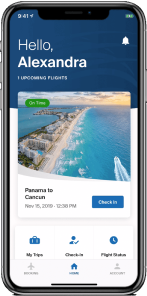
Download the Copa Airlines App now and buy tickets, manage your reservations, access to your ConnectMiles account and much more.



Subscribe and save!
Subscribe and be one of the first to know about our exclusive fares, promotions and last minute offers.
Subscribe